Showing posts with label Grammar Stage. Show all posts

Friday, May 12, 2017

Summer Scholé - Taking Learning Outside


Pin It
I'm a big believer in learning in year round learning.  Of course the type of learning and even the setting can look different, but we shouldn't just turn our brains off during the summer!

In the spring and summer months, I love to take learning outside as much as possible.  If you are looking for ideas for how to have a restful, soul enriching time of learning as the weather warms up,  read on!


Gather Your Group and Find Your Setting


We had a great group last year that was comprised of 4 families.  There were 8 actively participating children, ranging in ages 8 down to 3.

I made a flyer to share with others what our group was about.  I printed these out (1 sheet, front and back) and handed them out to a few families that I thought might be interested in joining us.  In case it might be helpful for you, here is what I came up with:


We picked a very large park to meet at.  It was a place where we could always find a place that wasn't being occupied by others so they wouldn't distract us and we wouldn't bother them =)

The year before, I had families over to my backyard for our summer learning, so don't feel limited by your choices of local parks, just be creative and pick any outside setting that will work for you!


Choose Your Subjects


We settled on covering three subjects each week.  You can choose anything that would be conducive to learning in a group and being outside.  We did poetry, nature study (birds), and art.

Poetry


I led the poetry portion, which I absolutely loved!  Each week I planned a new poem to memorize, a fun way to learn about poetry, and made copywork to send the kids home with so they could practice during the week.  

For instance, the first week, I read a poem called Alphabet Stew.  As I was reading it, I had the children reach into a bag of alphabet tiles and 'mix' them (like a pot of stew) while I read the poem.  Then I read a poem called The Ant and pulled letters out of our alphabet stew to make the rhyming words at the end of each line.  

5 Poetry Activities for Young HomeschoolersAnother week, we read a poem called Talents Differ.  It is a story about a little girl looking out her window and seeing a bird making a nest and getting ready to lay her eggs.  The poem is a conversation going back and forth between the girl and the bird, so I had the children pair up, one being the bird and one being the girl.  They got to act the poem out while saying their lines.

If you are interested, I could write a separate post outlining exactly what I taught each week.  If you want to read more about general ideas for teaching young children poetry, I wrote a post on the iHomeschool Network blog about that, so check it out!


Art


Another one of the moms led the art section.  She picked out a different artist for each week and brought examples of their work for the children to look at.  She would read a picture book about the artist or share information about their life and style.  Then she had an art project that corresponded to the artist for the week.  The project would mimic the artist's style in some way.  


The children used swirls to make a starry night like Van Gogh, they used wild flowers to create blurry nature paintings like Rembrandt, they used chalk on the ground to make BIG, up close flower paintings like O'Keefe, dipped their hands in paint to mimic Worhol's style, and more!

Starry Night by Vincent van Gogh

Nature Study


For the last subject of the day, we got to move around and really observe nature.  Another one of the moms led us in our study of birds.  Each week she would come with information to share about a different type of bird.  She would read the children a story about birds, have the children color a picture of the bird of the week, show them what the bird sounds like, etc.

The first week, she had the children make pretend binoculars using two toilet paper tubes and set them each up with a little notebook, pencil, and a simple one page bird guide.  Then each week after she shared about the particular bird of the week, she would send them to different spots to watch for birds and draw what they saw in their notebooks.  The children loved it and it was such a nice way to encourage a love of nature.


So what are your plans for this summer?  Do you take a full summer break or do you find ways to keep the learning alive?  I would love to hear what you have in mind!  We are getting ready to have another Summer ScholĂ© time like we did last year and I can't wait!


This week only, you can find amazing resources at a deep discount to help you with your Charlotte Mason plans for this summer and next year!


Save BIG at the 2018 Build Your Bundle Sale!

 photo SubscribeButton_zpsdc17ac56.png


Monday, May 2, 2016

Encouraging Curiosity with By Design Science


I received this curriculum for free in order to provide you with my review of it.  I was compensated for my time.  All opinions are my own.
By Design Science Textbook Review
Pin It
Classical education is what I love.  I used to think that in order to teach classically, I needed to use certain, classical curriculum.  While curriculum that has been designed to facilitate a classical education can be helpful, I have been learning that it isn't so much what curriculum you use, but how you use it.

When I first was given the opportunity to review By Design Science, I wasn't sure how I would like it since it isn't written specifically for classical homeschoolers.  In fact, it is the most textbook type book I have ever used with my children (other than for math).

I thought I should give it an honest look before making my decision, so I browsed the sample pages. What I found was engaging, Christian, curiosity inducing content.


By Design 2nd Grade Textbook


Each school morning since we received this curriculum my children and I have sat down together and learned about life science.  We have included this as a part of our spring trimester morning time and it fits perfectly!  I chose the 2nd grade text and started with the first unit, which is life science.  Each grade level (1st - 8th) of By Design Science is broken down into four units: life science, human body, earth and space science, and physical science.


By Design Student Journals
Student Journals For Each Unit

I am notorious for expecting my children to do more than is reasonable for their ages.  This curriculum was great for me because it gave me developmentally appropriate material to enjoy with them, and guess what?  They are loving it!

Even though By Design is a textbook, I found it to be delightfully conversational!  Basically, I would sit across from my children at the kitchen table, I would look at my teachers guide and they would look at the student text, and we would discover new things together.

First I would just have them look at the pictures on the page and try to notice all that they could about them.  Just this exercise of observing led to so many great conversations!  Then we would read through the few paragraphs out loud.  The paragraphs would share a bit of new information, but also would ask questions.  I love how this would get my children thinking and discussing, digging deep into the subject matter.  It really is an inquiry approach to science.

This curriculum (at this grade level) is not filled with facts to memorize and words that are difficult to pronounce, but instead guides children toward wonder and curiosity at the world that God has created.   


Engaging Your Children with By Design Science


By Design Teacher Manual

After we are done with our initial conversation about the material, I look around the boarder of my teacher's edition for other ideas of ways to engage my children with the material.  There are always great ideas to further their inquiry and knowledge.  There are more ideas to discuss, background knowledge to acquire, and experiments to discover.  Sometimes I mistakenly think "Come on kids, lets move on to the next thing now." But then I realize how silly that thought is, because this kind of engagement is exactly what I want!

During one of the lessons we were talking about what kinds of things animals need to survive. A suggested activity had to do with doing an experiment about the shape of bird's nests. This was perfect for us because we have been reading, watching, and nature journaling about birds this spring!  Here is my daughter having a fun time figuring out what shaped nest would best keep eggs from rolling out:

By Design Nest Shape Experiment

By Design Nest Shape Experiment

By Design Nest Shape Experiemnt

She made a hypothesis, worked hard testing the nest shapes, and excitedly came to a conclusion!  My son is the 2nd grader (the age this level is designed for), so I had him fill out the student journal page.  He recorded our hypothesis, our observations, and our conclusion.

By Design Student Journal


A Christian Science Curriculum


I believe that if we want to learn truth, it is impossible to leave God out of the story.  Some say that we need to do this for a subject like science, but I believe that we need to give glory to God especially in a subject like science.  How could we ever attempt to learn about ourselves and our world without first turning to the One who created us and this world.

By Design Science is a faith-based curriculum that acknowledges and gives glory to God throughout the book.  The text reminds us that God is the creator of all the things we are learning about and that he designed everything for a purpose!  Often in the book it asks us to look up a passage in the Bible or reminds us of a passage within the book.

I want to let you know that By Design Science is created by a Seventh Day Adventist group.  I am not Seventh Day Adventist, so I was on the look out for anything that would go against what my family believes.  The teachers guide does have quite a bit of info at the beginning about how this curriculum will reinforce the Adventist beliefs, but the student textbook does not include this information (which I was thankful for).  The student text is filled with references to God and the Bible, but I did not find anything at all that was contrary to my beliefs, in fact, I thought that the way it incorporated those topics was perfect!


Get sample pages from By Design grades 1 through 8


If you are looking for a science curriculum for next year, or want to lead your children into a curiosity driven exploration of the world this summer, I highly recommend that you check out By Design Science!  Don't forget that you can view sample pages from each grade level to help you learn even more!


Want to learn more about the publisher?  Visit Kendall Hunt Publishing Company and Kendall Hunt Religious Publishing.  


 photo SubscribeButton_zpsdc17ac56.png


Thursday, March 10, 2016

Learning about Handel with Music Appreciation from Zeezok


Music Appreciation with Zeezok
Pin It
This school year I have really been focusing on cultivating a love for beauty in my children and in myself.  This is not something that I gravitate toward naturally, but I am slowly learning that appreciating beauty can be just as valuable as understanding truth.

We have been casually turning on classical music, putting up art prints in our home, learning how to play the violin, observing nature, and doing other really simple things to help cultivate our taste for things that are beautiful.  Those kinds of things are easy enough to add in to our days, but beyond that, I am clueless!


Music Appreciation Help for Homeschoolers


Music Appreciation with ZeezokSo, I was really excited to be given Music Appreciation from Zeezok Publishing to review. Thank you, Zeezok, for helping my children and I along in our journey to love that which is beautiful! (I was provided this curriculum for free and compensated for my time.  Nonetheless, all opinions are my own!)

My familiarization of this curriculum actually began last spring.  A friend of mine decided to teach a music appreciation class to a few homeschool children.  I just dropped my kids off for these lessons, so I didn't really know what they were doing other than that they were using Music Appreciation from Zeezok.  My children enjoyed going to these classes and my friend raved about the biographies that came with the set, so I was intrigued!

When I got my hands on my own set of these books, biographies, and CDs, I was excited to jump in!  It was nearing Christmas time when we started, so I thought that learning about Handel would be fun, since my kids were already familiar with parts of his Messiah.


Music Appreciation in the Morning


I decided to incorporate Music Appreciation into our morning time.  I typically read to my children while they eat breakfast and then we move on to other activities as they finish up (memory work, geography, etc.), so reading the biography book about Handel was a natural thing to do.

Music Appreciation with Zeezok

These biography books are wonderful!  They read like stories and will keep the attention of your children.  I love that they begin telling about the musicians when they were children.  My kids loved hearing about what Handel was like when he was their age!

Music Appreciation with Zeezok

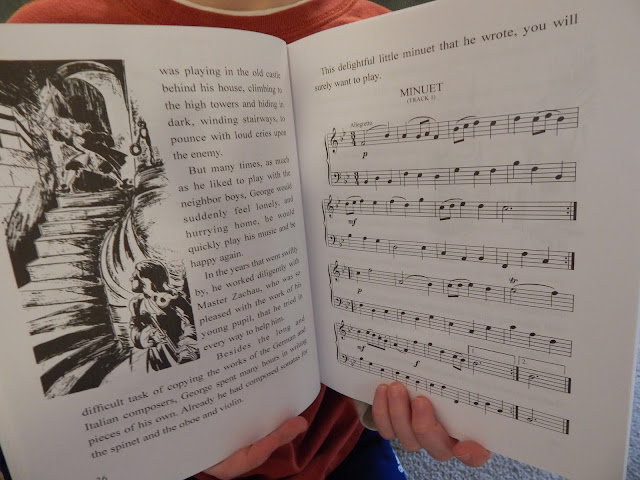
One of my favorite parts is how the book includes written music right in the midst of the story.  When the story talks about a musician writing a certain piece of music, it includes it right there for you!  You can pause from your reading to play the music (included on the CDs) or come back to it later.  Sometimes we would go right to the piano and play the song that we had just been reading about!  My kids thought it was so neat to connect the music with what we had been reading about.
Music Appreciation with Zeezok

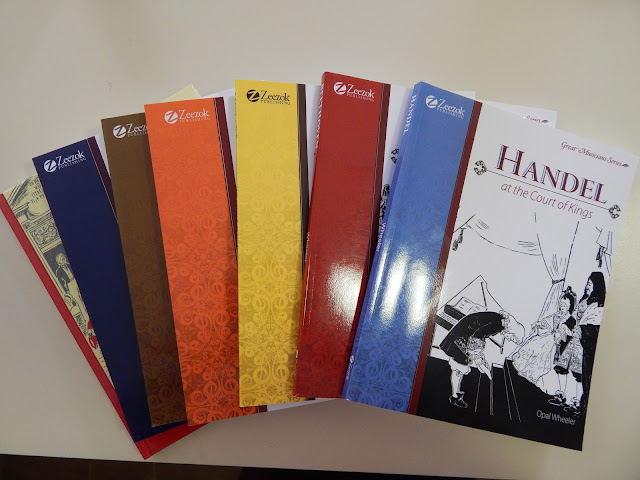
The set comes with 7 biography books:

  • Bach, The Boy From Thuringia
  • Handle at the Court of Kings
  • Haydn, The Merry Little Peasant
  • Mozart, The Wonder Boy
  • Beethoven and the Chiming Tower Bells
  • Paganini, Master of Strings
  • Schubert and His Merry Friends

Each musician is covered in a section in the Student Activity Book.  The activity book is broken down into weeks, giving each musician 4 weeks. We chose to work our way slowly through the lessons, so it took us longer than that, but you can go at whatever pace is best for your children!

The Student Activity Book has a variety of different worksheets for aiding in understanding. Each chapter has comprehension questions for what you read in the biography, and then also covers topics like character traits, geography, basic music theory, and lots more including more information about the lapbook pieces.


Music Appreciation with Zeezok


(If you have young children that will be tagging along in the lessons, you probably wouldn't want to get them their own workbook, but there is a great coloring book that I bet they would love!)


Music Appreciation Lapbook


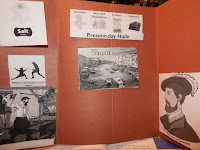
My kids and I both enjoyed the stories so much, but what they really looked forward to was adding pieces to their lapbooks!  This is the only part of the whole curriculum that takes a little effort on mom's part.  The lapbook comes on a CD, so you have to take a few minutes before you begin to print out all of the pieces.  I printed out all of the pages before we began, so each time we needed a new piece, it was all ready to go.

The lapbook pieces mostly added new interesting information about things that were mentioned in the book.  I think visuals will explain better =)


Music Appreciation with ZeezokMusic Appreciation with Zeezok 


Music Appreciation with Zeezok Music Appreciation with Zeezok

I printed everything out in black and white, but if you want a prettier lapbook you can print it out in color.  I'm pretty sure that we didn't put the pieces in the right places, but that is ok with me.  My kids enjoyed the process!  Here is what they had to say about it:


They didn't remember all the details perfectly, but I was really happy with what they learned! They are young enough that we could go through this again in a few years and I'm sure they would pick up more details to add to what they learned this time around.

All in all, I am very happy with this curriculum and we will be picking out a new composer to start learning about soon!  I like going in order, so it will probably be Haydn, but it is nice because you can really learn about the composers in any order.


Music Appreciation Discount and Giveaway


Are you looking to help your children appreciate music more?  I encourage you to check out all of the great music appreciation products that Zeezok has available, especially this Music Appreciation for the  Elementary Grades curriculum.

From now until March 25, 2016, you can get 10% off the Music Appreciation for the Elementary Grades curriculum with code: ihomeschool16

You can also enter to win your very own music appreciation program by filling out the form below!

If you purchase the curriculum and then win the giveaway, no worries because you will be refunded the purchase price.  So, take advantage of the coupon code right away!

Stay connected with Zeezok:       Facebook  ---  Twitter  ---  Pinterest  ---  YouTube


 photo SubscribeButton_zpsdc17ac56.png


Sunday, November 1, 2015

Scholé Group Update & Ancient History Activity Ideas

Pin It
Well, it's definitely fall now!  For us that means that there are more leaves on the ground than on the trees, the air is crisp, and the school year is well on its way.

My scholĂ© group has met 5 times so far this year and we are really enjoying our time together!  We took this week off as a small fall break, so I thought it would be a good time to share a little bit about what we have been doing!  

In case this is your first time here (or if you just need a little refresher!) here is a quick summary of our group:


The ScholĂ© Group of Rochester Hills began this year as a small group of like-minded families who desire to pursue restful learning together.  We have three families this year and are enjoying our small group environment.  We are a young group, with five children ages 4-7, so our meeting times may look a little different than other (older and larger) groups.  Our main goal this year is to develop a love of learning in our children, setting before them a multitude of opportunities to take in truth, goodness, and beauty.

Ancient History Ideas


We have started with ancient history and are moving our way slowly toward the present.  We focus on one people group or event each week.  So far we have learned about Creation, the Flood, the Tower of Babel, the Ancient Sumerians, and we have just begun learning about the Egyptians.  We trace maps, add our events to a timeline, and do activities that help the children grasp what we are talking about.  Here are some of the activities we have done:

Paint cave drawings like early nomads - cut open some paper bags and let the children tell a story with pictures.  They can draw animals, people, or scenes from nature.   


Write in cuneiform like the Ancient Sumerians - roll out some clay (or Play Doh!) and have your child write messages using a stick.  Here are some symbols you can use: Lean How to Write in Cuneiform.


Make a model of the Nile River - We introduced the Ancient Egyptians by talking about the land of Egypt.  The children enjoyed making this model of the Nile River.  We even planted grass seeds in the dirt and had fun watching the 'reeds' grow up along the banks of the river!


Scholé Groups Spotlight


I was honored to be asked to write about my group this month for the Classical Academic Press ScholĂ© Group Spotlight.  If you would like to read more about what we've been up to, head over to the ScholĂ© Groups website!


 photo SubscribeButton_zpsdc17ac56.png


Monday, September 14, 2015

Starting a Scholé Group - My Plan for the Year

Pin It


A new school year is here!  I love planning and preparing, so summer was really fun for me.  This year will be different for us than any of our previous years, so I had lots to plan!  I am excited for the changes!

One change from last year is that we will not be a part of a Classical Conversations group this year.  (If you are interested in why, read my post Why I Am Not Returning To Classical Conversations.)  Last year was a good learning year for me as far as figuring out what I want my homeschool to look like and what I think education in general should look like.

One thing that I am learning is that I think there is real benefit to doing some parts of education together, and benefit to doing some parts alone.  By together, I mean with other children/families, and by alone, I mean at home as a family.  Ideally I think I would really like a half-day cottage school type program (that is located 5 minutes from my home, that teaches using the classical model, and filled with wonderful students and amazing teachers....hey a girl can dream, right?) but that is not available to me at the moment, so I've come up with something as close to that as I can get for now.

At the end of my Why I Am Not Returning To Classical Conversations post, I listed somethings that I desired for my homeschool this year.  Here is what I wrote:

I want a truly classical group.


I want a group of like-minded people to dive into the full richness of classical education with.  I want to dive deep together, cultivating virtue, enhancing wonder, and pointing our children toward truth, goodness, and beauty.

I want freedom.


I want the freedom to change things that need to be changed.  I want the ability to stay on one subject for 2 hours if the children are engaged in the wonder of God's creation and there is no pressing reason to stop!  

I want to work together with other moms.


The Body of Christ is so diverse in our gifts and talents.  CC literally left me in a state of exhaustion each week because their model has the tutor doing everything (to show that "You can do it too, mom!")  I appreciate their desire there, but it has made me understand more fully how every person is uniquely gifted and that it is beautiful when we come together and share our strengths!  

I think that meeting days could be a time of joy (instead of stress), with each mom doing what she loves to do, blessing the entire group by doing it.


Enter Scholé Groups from Classical Academic Press


A few friends and I had already been talking about getting together once a week this year for a co-op type group.  We had the same desires as far as working together to create a day of joyful, restful, beautiful learning for our children, but didn't have all of our ideas together yet.  Then I heard about a new program that was being launched by Classical Academic Press, called ScholĂ© Groups.


I have been greatly influenced by Dr. Perrin and many Classical Academic Press resources, so I knew right away that I wanted to check this out!  It turns out that it is a perfect fit for what my friends and I had already started formulating.

A ScholĂ© Group is unlike other homeschool groups in that it does not tell you the specific course of action that you need to follow (no specific classes or curriculum is outlined).  The folks at Classical Academic Press simply want to lead us in our understanding of classical education principles and help us to employ them as we learn together.  From their website:

"A ScholĂ© Group is a homeschooling community of at least two families employing the content of a classical curriculum and the pedagogy of restful learning embodied by the word scholĂ©."

So, that is what I am doing this year!  I spent the summer planning, hit a few bumps along the way, planned some more, and now will be starting my ScholĂ© Group this week on Tuesday!  My group is pretty small (3 families) and quite young (ages 4-7), so it is going to look different than other ScholĂ© Groups, but I think it is going to be wonderful!


Scholé Group Curriculum


Here is what a day in my group will look like:

Morning Meeting


Recitation - One student each week will share something with the group.

Bible/Virtue Lesson - We will start our days pointing the children (and ourselves!) to Christ.

Memorization - Each week we will learn a Bible verse and a hymn together.


History & Geography


This year we will be learning about ancient civilizations.  We will memorize a timeline and create one of our own.  We will learn about the people, places, and events of history through story, song, and hands-on activities.

We will use Story of the World as a jumping off point, but will add or take away as we see fit.  I am really enjoying the corresponding activity book which provides map work, reading suggestions, and lots of great activity ideas.


Nature Exploration & Recess


When the weather is reasonable, we will take the children outside to explore God's creation.  Some days we will have specific activities for the children, and other days they will explore freely.


Lunch


I have typically thought of lunch as a break from the day.  When I was reading the ScholĂ© Group handbook I was intrigued to read their thoughts about lunch.  They talk about lunch being a time for great conversation, beholding that which is beautiful, and restful enjoyment of food.  I'm sure I still don't exactly understand it all, but that sure got me thinking!

We are planning on opening our lunch time by singing the Doxology and then praying.  The children will all have a part in setting and clearing the table and will work on learning certain manners each week.  Remember that my group is very young, so we have to start with the very basics!  Hopefully as we grow we will be able to engage in great conversations, but for now we will focus on keeping the kids in their seats for the duration of lunch and saying please and thank you =)

I plan on having something nice to set on the table each week (flowers, candles, etc.) and playing nice music in the background.  If anyone has any other ideas for making lunch a venue for contemplating truth, goodness, and beauty, please share!


Literature


I really want to title this section The Great Books, but in reality it is going to be the Kindergarten version of great books.  I am really excited for this time as we strive to help the children love books and begin to learn how to discuss what they have read or heard.  This time will change throughout the year.  We will read pictures books, chapter books, poetry, etc., discussing and doing activities where appropriate.


Music


We will end our day by attending a local homeschool music class together.  Hopefully the kids won't be too tired out after our day of scholĂ©!  I think it will be really fun and a great experience for the kids.


So, there you have it.  This is my plan for next year!  I am very hopeful that it will be a wonderful time of learning and exploration.  I will share more with you as we get going.  If you want to see some other ScholĂ© Groups in action, check out Sola Gratia Mom and Expanding Wisdom's Paideia Fellowship. 


 photo SubscribeButton_zpsdc17ac56.png


Monday, September 7, 2015

Expandable Book of Centuries - A FREE Timeline for You!

Pin It

I am so excited to be sharing this with you today!

Do you use a timeline in your homeschool?  I have seen so many different kinds of timelines offered through curriculum companies, on Pinterest, and on other blogs.  You've got wall charts, timeline cards, notebooks, and so much more!  My problem is that I can never find exactly what I'm looking for.  Since my kids and I are starting back at the beginning of time this year, I thought it would be a good time to get serious about a timeline =)

We have done a timeline before, but even my oldest was too young to really benefit from it and definitely too young to take care in adding events to it.  I am glad we started one before though, because it showed me what I wanted in a timeline.

  • I want a L-O-N-G timeline - I love to see the vastness of history.  I love to see proportionally how much time passes between events.  I love a beautiful, long timeline displayed on a wall.

  • I don't want to have to put my timeline on a wall - Yes, I love displaying a timeline, but realistically I don't have a wall that is long enough to do this.  Maybe in the basement, but that isn't very handy.

  • I want to be able to easily see things from different topics that are happening at the same time - That wasn't a very clear heading =)  What I mean is, I want a timeline that is orderly and easy to read.  I want to be able to see what developments in math are happening during different times in history.  I want a record of what time period fiction books are set in.  I want it all in one place...neatly.

I'll tell ya, I almost found want I wanted.  Have you heard of Add a Century?  They have a really neat system over there, and I almost just went with it, but I decided to customize my own thing instead.  If you want the ease of buying a physical product (instead of downloading, printing, taping, etc.) definitely head over there to see if you like their timeline!

So here is what I created for me...and you!


It is a 65 page download (62 of which are the actual timeline).  Print out the whole thing, or just enough to cover the time period you are currently studying.

I printed mine on card stock for durability.

Tape the pages together (on the back) with a strong tape (I used packing tape).  This allows the pages to fold together like an accordion and be stored in a binder.

Insert the cover page into a plastic sleeve (hole punch the sleeve if it doesn't already have holes) and fold the rest of the pages behind it accordion style.  This allows you to be able to flip through your timeline like a book, or S-T-R-E-T-C-H it out across your table/floor/wall.


Now look closely at the pages.  Across the top you will find dates.  They start at 4000 BC and have 100 years of time on each page.  Down the sides you will find labels.  These are so that you can keep an orderly account of what was happening in different segments of history.  The labels are:

  • People - record the life spans of specific individuals
  • People Groups - record the rise and fall of empires
  • Historical Events - record important events in history
  • Science/Math - record advancements in these categories
  • Arts - record the creation of famous paintings, the writing of beautiful music, or just the types of art that were prevalent in different time periods 
  • Literature - record when books were written
  • Fiction - record when your favorite fictional stories took place

Seeing all of these types of categories together helps your student have a holistic view of the world and it's history.   Of course if you want to change any of these categories to suit your needs, feel free.

There is a little space at the bottom of each page for you to write anything you might want to add.  I am thinking of color coding the different people groups, so I might use that space as a legend (anything having to do with the Egyptians - orange, anything from the Bible - blue, etc.)

You can have your child write information on this timeline, draw pictures, paste pictures that you have printed out, or a mix of all those things!  My kids are pretty young, so I am sure that there will be many pictures in their books!

Would you like to download this Book of Centuries for FREE?


I am thrilled to be able to offer this 65 page timeline to my email subscribers for free!  If you are already a subscriber, it will be coming to you in an email later today.  If you are not yet a subscriber, you can sign up now and receive this timeline and other freebies as soon as you confirm your subscription!


Add-A-Century Timelines ~ Homeschool History Teaching Tools

Don't want to print your own?  Check out the ready made Add-A-Century Timeline!


 photo SubscribeButton_zpsdc17ac56.png


Don't miss out on lots of other printables today from some of the bloggers at the iHomeschool Network!


Related Posts Plugin for WordPress, Blogger...