Showing posts with label 3 Year Old School. Show all posts

Monday, January 27, 2014

The Writing Road to Reading Review

Pin It

The Writing Road to Reading was one of the first purchases I made when I began to teach my son.  It was recommended on classical-homeschooling.org as being a great resource for teaching reading to children.  It really is a great resource!

Today I am reviewing this great book over at The Curriculum Choice. Check it out!


 photo SubscribeButton_zpsdc17ac56.png

Friday, April 12, 2013

Teach Your Child To Write - A Beginner's Writing Notebook

Pin It

This post contains an affiliate link to a product I love.

My little girl is turning 3 this month.  For the past year she has loved coloring, cutting paper, gluing things, etc.  She has incredible fine motor skills.  These two things coupled together led me to begin teaching her to write letters a little over two months ago.  She is doing an amazing job, and I wanted to share with you what I have been doing with her.

This is a simple, no-hassle, no fancy curriculum needed, way to help your child (at whatever age they are ready!) learn to write.  It is the very first form of copywork; simply mimicking correctly written letters.


Just before I began teaching Mackenzie to write her letters, I bought a really simple book binding system (that I'm in love with!) so I just HAD to make up a writing notebook for her.

The idea was to have her learn a new letter each day we did school work, practice previously learned letters, and also master letter sounds along with it.  So, I printed these {free!} A-Z Handwriting Worksheets from Confessions of a Homeschooler and on the back of each page I printed these {free!}blank Beginner Handwriting Sheets from Classical Copywork.


Here is what we do

  1. Review the previously learned letters by looking at each page in the book she has already done.  I turn the pages and she tells me the name of the letter and what sound it makes.
  2. Learn how to write the letter by tracing over the letters and letter parts on the A-Z Handwriting Worksheet for the day.  
  3. Practice writing the letter on her own.  I write one uppercase and one lowercase example for her on the blank Beginner Handwriting Sheet on the opposite page and she does her best to copy it across the line.  Some letters she caught onto quickly and others took practice over many days.
  4. Review writing previous day's letters.  I write letters on the rest of the lines for her to practice with.  Sometimes I pick the more difficult ones that she needs extra practice on and other times I let her pick which ones she wants me to write.


This process does not take long each day and it is really working well!  In just two months, she can write and give the sound for almost every letter.  I love the idea of having it all in a book like this because it is easy to review the previous letters, everything is in one place, and I don't have to print out a new sheet every day.  I'm going to have a post up soon about the book binding system I've been using and how simple it is to use!


I encourage you to try making up a notebook like this for your child if they are ready to begin learning how to write!

Thursday, September 27, 2012

Learning Together


I recently was talking to a friend who is in her first year of homeschooling.  She has four boys, one who is a toddler and three who are in elementary school.  I asked her how it was going and it sounded good, but like there was a lot going on (obviously, with four boys!)  I asked her if they were all doing separate studies, she said they were.  I advised her to think of any subjects that they could do together.

My children are little, but we start each day out around the breakfast table learning together.  This is a pattern that I hope to keep as they grow!  We review items from our memory box (Bible verses, poems, definitions, etc.), read a character building story, read our history lesson, sing songs, etc.

This is a great way to start the day.  It starts us off immediately and on the same page.  It streamlines things by tackling items together and at the same time.  The little one gets to learn from the older one, just by observation.  I am always amazed when I ask my 4 year old a question and the 2 year old answers it before he does =)

When we are reviewing material, first I ask the little one things that she might know.  For example, our first memory verse of the year was Genesis 1:1-2.  My 4 year old knew Genesis 1:1 from last year, so verse 2 was the new one for him.  When we review that verse, I ask my 2 year old to say Genesis 1:1 and then ask my 4 year old to say both verses together.  When we read from our history lessons, I begin by asking my 2 year old basic questions, maybe based off of a picture or something like that.  I may ask her to find something red on the page or to tell me if so-and-so was happy or sad in the story.  Then I move on to asking my 4 year old age-appropriate questions for him.  It's neat because it really is doing life together and watching and helping each other learn and grow.

Many of you have older children, and you might be wondering if this can work for you too.  Definitely! The history reading could be just the starting point for individual work that the older child need to work on later in the day.  Older children could read aloud essays they have written, or lead the family in a song or devotion.  Older children still need to be memorizing things, so add their items to your list (or box, or binder, etc.) and quiz them right along with everyone else.   You could share prayer requests with one another and spend some time in prayer.  You could perform a science experiment, or demonstrate scientific concepts for your children.  Like history, this might be all your younger children need, but it could be a jumping off point for further research or assignments for your older children.  A perfect idea for this time is reading quality books aloud and having your children dictate them back to you, starting with the youngest and having each older child build upon what the younger ones have said.

Those are just a few ideas.  The beauty of learning together is that you decide exactly what it will be to meet the needs of your family!  It may be more work for Mom in the moment (compared to just handing out workbooks to everyone for their individual studies), but it is simpler in the end because you don't have to keep on top of 2 (or 3  or 4 or 10) different programs.

Obviously there are certain subjects that children need to do separately.  I would not recommend trying to teach a young one to read during circle time (though you could include phonograms or words to read in your memory box for them), and each child is probably going to have to do their math work independently.  But, if your time together could be a unifying starting point for the day, imagine how great that could be for you kids (and you)!

My friend Kendra, from Preschoolers and Peace, has written an ebook on this subject, titled Circle Time.  I recently read this and loved it!  She is generously giving away one copy of Circle Time to one of you!  This is a great book to read if you are interested in starting a time of learning together in your family, or if you are looking for ideas or suggestions to improve what you have already been doing.  So, what is in Circle Time?

  • Why do Circle Time?
  • How long is enough?
  • What to include for different ages.
  • Expanding Circle Time with older children.
  • Sample time schedules
  • How to keep the littlest ones happy.
  • Questions and Advice from other moms.
  • Resource, Activities, and Ideas lists
  • Organizational sheets for Mom.
  •  and more!

Sound good?  It is!  Enter below to win a copy to read for yourself!

a Rafflecopter giveaway

Happy Learning Together!

Pin It

Wednesday, August 8, 2012

Ultimate Guide to Keeping Young Children with you at Church

Pin It

My husband and I keep our children (currently ages almost 4 and 2) with us during the worship service at church.  We have always kept them with us.  It is not that we are necessarily against Sunday school, but that we are for worshiping together as a family.  Just like everything else in parenting, it is about training.  This post is not going to tackle the why of keeping your children with you at church, but the how.  If you are looking for the why, I can recommend the book Parenting in the Pew and I will also link to some resources on that subject at the end.

Child in Church Archival Photo Poster PrintFirst, you have to evaluate how child friendly your church is.  If your church requires all children to be in the worship service (has no other option for children), then I would guess that they would also have more leeway as far as noise level and wiggling goes =)  Your church may be smaller and understanding of distractions (everything from cell phones ringing to babies babbling).  Maybe your church does not encourage children in the worship service, but also doesn't give you dirty looks when you walk down the isle to your seat with your children it tow.   I hope that you church does not flat out refuse children in the service, if so, I would strongly question their theology on children and have some serious discussions with the pastor.  This post is targeted at parents who want to worship with their children, but need to keep them very quiet out of respect for others listening and the pastor.

Are you ready for the Ultimate Guide to Keeping Young Children with you at Church?

How to prepare:


    photo credit
  • If your child is struggling to sit quietly still through your church service (and what young child doesn't?),  it is a good idea to practice at home.  This can include: 

    • Simply practicing obedience ("Tommy, quiet while mommy makes this phone call." "Kate, sit still while you eat your dinner") and expecting obedience!
    • Have family worship (devotions) during the week and expect the same the behavior that you are striving for at church.
    • Have a baby/toddler sleep in your arms or sit in their car seat to practice what being still is like (keeping a baby quiet at all times is impossible, but you can work on stillness)
    • Have a preschool/young elementary aged child sit an listen to a sermon during the week to practice correct behavior.

  • It is much easier to train in the comfort of your own home that it is in the midst of a Sunday sermon.  

  • Right before you enter the service make sure everyone has gone to the bathroom and give your kids a peptalk of what you expect from them.  As young as 18 months my kids could answer the question "How do we act at church?" with a "shhhh" or a "quiet" showing me they are beginning to understand. 


Where to sit:


  • Up front.  This may sound like exactly what you don't want to do,  but hear me out!  Sitting up font puts your kids near the action.  There is more for them to look at and pay attention to.  They may feel more important, thinking that the pastor is speaking right to them!  If you do this, make sure you are not coming and going all service long...when we sit up front and have to leave for a minute, we slip in the back after or wait until the end if it's almost over. 

  • In the back.  If you have a small baby who is awake and babbling, fussy, or a child who you know is going to need some extra attention/training, it my be best for your to stick to the back =)  You definitely don't want to be a distraction to others if you don't have to be!  When my children were babies, I liked being able to walk them in the back until they fell asleep and then be able to quickly slip back in the pew with my husband. 

  • The end of a pew.  Generally speaking it is best if you can stick to the end of a row.  If you foresee having to leave at all, it is doing no one a service to have to climb over others in order to 'slip out.' =)  That being said, for a while my daughter was obsessed with stairs.  Where we sat in church was up some stairs, so for a while my family sat on the end of the pew, but we positioned my daughter farthest in so she wouldn't be tempted by the stairs.  So, evaluate your situation, consider others, and pick a good spot!

  • By a door.  If your church is not tiny, try to sit by an easy exit.  This is merely for the consideration of others, your pastor included!  If you can go from your seat to a door with no one noticing, that is fantastic!  In our church, there are even doors up front, so we have the option of sitting just about anywhere.  When my kids were babies, instead of sitting by an EXIT door, we would sit close to the cry room door.  Just think about the layout of your church and pick a spot that makes the most sense and is going to distract your pastor (and others) the least if you have to get up and walk out!


What to bring:


  • Something to keep the hands busy.  I do not advocate entertaining your child with many toys because I do not want children to grow up thinking that a church service is something they need to distract themselves from, but I understand that young children get fidgety and keeping their hands busy can help.

      Photobucket
    • Keep it simple.  A Bible (children's or adult), a piece of paper and pencil, a shoestring, hair tie, or pipe cleaner, a quiet chew toy for a baby, etc.  Do not bring a whole bag of toys or a whole pack of crayons. 
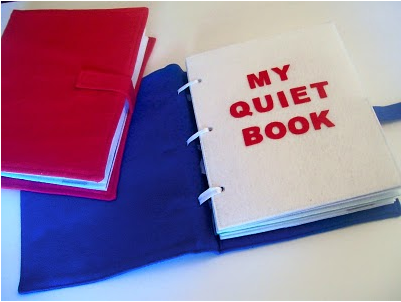
    • Keep it quiet.  Lauri toys or stickers are good options.  A simple busy bag might do the trick.  Be careful of loose papers for drawing on and books with thin pages as they can be loud (think crinkling and constant flipping).

  • Something to keep the mouth quiet.  This should be reserved for very young children.  Once you child is preschool age, they should understand that they need to be quiet.  This should also not be brought out at the beginning, but reserved for times they need to be extra quiet or for near the end when they are needing help for the last little bit of the service.

    • Keep it clean.  Avoid things that can make a mess on their hands or the floor (I avoid suckers/fruit/etc. and crackers/pretzles/cereal/etc.) My favorites are gummy bears (not so healthy) or dried fruit because they are in small pieces that can be put right into the mouth.
    • Keep it quiet.  If a food is going to be noisy, don't bring it!  My son likes to bite hard candy, so we don't let him have it.  Crackers/cereal/pretzles/etc. are also noisy when crunched, so that is another reason we do not do them.  We bring a sippy cup for each of our children and have found that certain cups are noisier than others.  As a side note, we also do not offer the drink until the very end, and only if they need it to help during the last few minutes because drinking inevitably leads to bathroom breaks =)

  • Something to aid in learning.   This will vary with different ages, but the ultimate goal is helping your child to learn, so always be thinking to that end.  

    • A preschooler can trace over relevant words you have written on a paper or circle pictures that they have heard the pastor say (ex. Bible, Jesus, etc.)  A beginning writer can copy a verse from the text or write down a few words they hear the pastor say.  They can look for the passage in their Bible or read the number of the chapter in the Bible.

  • Some great ideas from other ladies.


  What to train:


  • General Concepts

    • Consider others better than yourself. We are not teaching our children to be quiet for the sake of being quiet.  If we consider others better than ourselves, we will not keep them form being able to pay attention and learn.  We will also not be a distraction (think running up and down the isle for multiple bathroom breaks) to the pastor because that would hinder him being able to share his sermon with us as he had practiced.

    • Self control This is a worth wile thing for any child to learn.  If we control our hands, they will not be waving in the air or poking our sister =)  If we control our mouths, we will sing at the appropriate time and be quiet at the appropriate time.

    • What the body of Christ looks like.  A child partaking in a church service gets to see what communion looks like, what a group of people praying looks like, what their father singing to the Lord looks like!  They see their parents (and others!) valuing the work of the church by tithing and the entire congregation supporting new believers in baptism and membership.  These types of activities and experiences are not and cannot be replicated in a children's church.

  • Here are what some other ladies have to share about this...

    What to expect: 


    • Baby (0-6months)  - Sleep, nursing/bottle, pacifier.  Begin to associate the church service with being calm.  Take your baby to the back or out of the room if needed, but do not take them to play (this will associate inappropriate behavior with a reward.)

    • Toddler (7months-2 years) - Sleep (encourage napping if the child still would normally take a nap at this time, which should be easy if they have been trained in this since day one), sitting on parents lap (do not let them walk back and forth in the row, but model stillness), folding hands during prayer, bathroom break for early potty trainers, not making it through a long sermon (if my toddler does a good job, but starts to get fussy at the end, I don't mind taking him/her out early and telling him/her that they did a great job!)

    • Preschooler (3-4 years) - Standing and sitting along with the rest of the congregation, folding hands/closing eyes during prayer, looking at a Bible, filling out a page about the sermon (coloring page, copying /tracing words, etc.), one bathroom break tops.

    • Young Elementary (5-7 years) - Full participation in the service, no bathroom breaks, no toys only a paper to write notes or draw a pertinent picture.  


    Other Great Ideas (or posts that cover more than one of these topics)


    I hope that this has either given you some ideas if you keep your children with you in your church's worship service, or has encouraged you to at least think about this subject (or even give it a try!)  If you have any questions or other ideas, please let me know!  If you have written a blog post on this subject and would like me to like to it above, let me know and I will most likely add it (I'll have to make sure it is on topic, in line with the point of this post, family friendly, etc.)

    Wednesday, August 1, 2012

    Early Grammar Stage Focus - Play and Exploration

    Pin It

    This is the final section of my series based on the article 10 Things To Do With Your Child Before Age 10.  To learn more about what I am doing, read my first post on Reading and Writing.

    You can get this "10 things..." article plus SO much more information in the book Teaching the Trivium from the good people at Trivium Pursuit.


    This week's focus is on Play and Exploration.


    This topic could not come at a better time!  My family just moved from a two bedroom, no yard, up a flight of stairs condo, to a nice home on an acre of land, with a basement.  Before we barely had room to put our things, so many things were in bins and boxes in our one car garage.  We tried to go out to parks as much as possible, but it was hard not just being able to run outside for a minute to burn off some energy.  I know many families live this way (and worse!) so I am not complaining, but just contrasting to how blessed I feel now to have a home and yard for the children to play in and explore!

    The article mentioned above encourages us to give our children plenty of time to play, but not necessarily in the way you might think.  They suggest giving your children tools so they can create (build, garden, sew, etc.) and explore (binoculars, microscope, telescope, etc.) along with more traditional things like blocks and dress-up clothes.  We get tons of plastic, electronic toys from family members, and while they are really fun for a short amount of time, we have seen how their sparkle soon wears off and the toy is mostly useless.  I definitely see the great benefit in giving your child things that they have to think how to use, as opposed to the toy being the one to say how it's used (by talking or moving itself for example).

    The article goes on to discourage us parents from letting our children use electronic devices for entertainment (TV, video games, etc.)  I definitely see their point, but I can tell you it's hard to do!  I see a difference in my son's attitude after he watches TV, and I hate it, but sometimes I just need an uninterrupted break so I let him watch.  Really, I know that he needs to learn to play with things better (as opposed to watching things passively), and that is something that we are working on.  I'm not going to tell you to never let your child use electronics, ever, but at least be aware of how much time they are spending doing this sort of thing.   

    We got into bad habits living in our condo.  Since it was not easy to go outside to play and explore, my son would fill up with energy and not have anywhere constructive to get it out.  He would act up and an easy way to have him clam down was to let him watch TV.  This, of course, made him like TV more and want to watch it more because he was used to being fed entertainment instead of creating it himself.  This is something we know we need to work hard at reversing.  I can tell you already that just being in our new home with a yard to run out into has helped immensely!  Since the TV isn't in a prominent place in the house, he doesn't see it as often so he doesn't ask to watch it.  I am excited to see him learning the joy of playing and exploring, and can't wait to see him grow in this area!


    Goals for Play and Exploration:

    • Provide more tools for exploration
    • Make good toys accessible in the house
    • Drastically limit TV time (no more than  1/2 hour a day?)

    Saturday, July 21, 2012

    Early Grammar Stage Focus - Discipline

    Pin It

    This is part nine of my series based on the article 10 Things To Do With Your Child Before Age 10.  To learn more about what I am doing, read my first post on Reading and Writing.

    You can get this "10 things..." article plus SO much more information in the book Teaching the Trivium from the good people at Trivium Pursuit.

    This week's focus is on Discipline.


    I feel a little funny writing about this topic because I am no where near the perfect parent and my children are no where near near the perfect children (but God made us perfect for each other! =)   As far as discipline and obedience goes, we are still in the training process, but I still want to share with you all today because the article mentioned above has some great thoughts on the subject.

    This section of the article begins by saying that if the area of discipline is neglected, you might as well forget about academics.  If our children do not learn to be obedient to us, then they will most likely struggle with self-discipline in their own life.  We work on that a lot in my home.  It is fun to do loud, active things sometimes, but we also need to learn to be in control of our body and our mouths (and our thoughts...but we're not tackling that one yet with our 3 and 2 year olds =).

    Ideally, we should have the respect of our children, they should love to please us, and they should be obedient (happily) at our first request.  I don't know that this is ever possible to get 100%, but it's a good goal!  Also, as children mature, you want them to be critical thinkers and not just follow commands blindly, so this concept needs to be tweaked at each developmental stage.  For example, it is appropriate for two year olds to obey for no reason other than because their parent told them to.  A four year old has new processes going on in his head and wants to know "why?"  It is good to explain things to this aged child, but it is not appropriate for them to need to know the answer in order for them to obey.

    I have found with my children that a huge impact on their obedience (and attitude that goes along with it) is my attitude.  If I let my 'in the moment' anger get in the way, it doesn't accomplish much and in fact I am convinced that it causes more anger and aggression in my children in the near future.  So, as parents it is very important for us to react calmly and lovingly, yet still unwaveringly.  It is also important to make sure that you child hears you when you give them a command or ask them a question.  In order for that to happen, you need to train them that it is of utmost importance for them to look at you right away when they hear your voice.  This is for their safety if nothing else!

    I do want to make clear that the goal of discipline is not to make robots of our children.  Ultimately it is to have an enjoyable, peaceful home and to win our children's hearts, to guide them to loving God, and to raise thoughtful, considerate, teachable, young adults.

    If for no other reason...

     Children, obey your parents in the Lord, for this is right.  "Honor your father and mother" (this is the first commandment with a promise), "that it may go well with you and that you may live long in the land."  Fathers, do no provoke your children to anger, but bring them up in the discipline and instruction of the Lord.   Ephesians 6:1-4

    This section in the article has a few other very informative sub-sections on socialization, work ethic, having a peaceful home, having a good attitude, and a few others.  They are definitely worth a read!  Even if you do not agree with every word, there is much food for thought. 

    How do you handle obedience and discipline in your home?  What do you expect from your children and how do you go about getting it?  I'd love to hear some tips from you, or ask a question that someone else here can help answer!


    Check out how we are doing in this area in my follow up post, Discipline Re-Visited.
    This post is a part of the following series:


     photo SubscribeButton_zpsdc17ac56.png

    Monday, July 16, 2012

    McGuffey's Primer Copywork


    Each of the following pages correlates with a lesson in McGuffey's Eclectic Primer (Revised Edition).  Each page has sentences from a particular lesson typed clearly for your beginning reader/writer to easily follow and has ruled lines directly underneath to easily copy.  You can print these pages out for your child to write on.

    This copywork is designed with a beginning writer in mind.  Your child will start writing on half inch lines and as the pages progress, the lines slowly get smaller, ending at a quarter inch.  This will gently prepare your child to write on standard wide-ruled paper.

    Every fifth lesson in McGuffey's Eclectic Primer is a review lesson.  The lesson in the primer is simply a few sentences for your child to read that incorporate the previously learned words.  I recommend using these review lessons for dictation.  Dictation is reading a sentence to your child and having him write it from memory (not looking at the words and copying them).  I did not write any sentences on these pages, instead provided just blank lines so your child can write whatever you choose to read aloud to them.

    Copywork is a fantastic way to help your child master reading, penmanship, grammar, and spelling all at the same time simply and subtly. 

    Sample Pages: (click on an image to enlarge it)


    $1.00 - 52 copywork pages, one for every lesson in McGuffey's Eclectic Primer.       

    To purchase, please visit Classical Copywork!
     

    *** If you do not already have McGuffey's Eclectic Primer (1881 Revision) it can be purchased at amazon here.  Since it is a public domain title, it can also be accessed digitally for free on Project Gutenberg here.***
    Pin It

    Wednesday, July 11, 2012

    Preparing for a Classical Education


    I love the classical model of education.  I love the idea of teaching children how to learn so they can eventually learn for themselves in any situation.  I love the idea of teaching history chronologically and incorporating many subjects together instead of segmenting them.  I have wanted to teach my children classically since, well, before they were born =)  I am now blessed with two little ones (currently 3 and 2 years old), but their physical abilities, attention span, and mental capacity are not ready yet for true classical teaching, so what do we do?  We prepare them for a classical education...

    I'm excited to be guest posting today over at Homegrown Learners.  To read the rest of this post, click here

    Pin It Photobucket

    Sunday, July 1, 2012

    Preschool SQUILT


    A few months ago, I read this neat post over at Homegrown Learning about SQUILT.  What in the world does this funny name mean?  It stands for Super Quite UnInterrupted Listening Time.  I thought the concept sounded really neat, and very doable, so I wanted to give it a try with my kids.

    Essentially it is choosing a quality piece of music to listening to, and then being super quiet while you listen to it.  We haven't done too much with classical music, so I thought this would be a simple way to introduce this good music, and I also thought it would be a good way to have the kids wind down after a busy morning.

    Mary, from Homegrown Learners, suggests listening to the piece of music, talking about what you hear, then finally doing a notebooking page about it (which she has for you to download, so go check it out!).  This is great, but the notebooking page seemed too advanced for my two and three year old, so I wanted to take her idea and make it more suitable for them.

    I have been doing this with my children since the day I read Mary's post.  My children love it, so we do it as often as I think to do it (or am asked to do it by my three year old!)  This is what we do:

    1. Listen quietly to the piece of music (I pick something about two minutes long)
      • We lay right down on the floor next to each other.  This makes it fun for the kids =)
      • We close our eyes and do not make any noises until the song is over.
    2. Talk about what you heard.
      • How did the music make you feel? (happy, sad, etc.)
      • What instruments did you hear? (piano, cymbals, trumpets, etc.)
      • Was the music fast, slow, or a mix? 
    3. Listen to the piece again, this time talk about what you are hearing (volume, speed, sounds, etc.)
      • Dance to the music, mimicking what you hear and how it makes you feel
      • Color a picture, using the colors that match the sounds in the song and coloring at the speed the song is playing at
      • Make up a story to go along with what you hear

    These steps are basic (and fun!) enough for my little ones to understand.  My three year old can pick out a few basic instruments, and I can teach him others we hear that he does not know.  He does not always understand the emotion the song is trying to convey, but it give us something to talk about.  Both of the kids LOVE dancing to the music the second time around.  We stomp like big bears or flutter like birds, spin in circles or hop up and down, etc.

    Like a said before, this seems like a great introduction to music and can teach your children self-control, acceptable ways of expression, new instruments and music styles, etc.  If nothing else, in the middle of a loud, busy day, its does a mama's heart good to have a few moments of peace snuggled up to her little ones =)

    Have you done this, or something like it with your children?  I'd love to hear about it!  And make sure to check out Homegrown Learners to read her post on SQUILT and her whole series on 10 Days of Teaching Music.

    Happy Listening!

    Pin It

    Wednesday, June 20, 2012

    Read Aloud Review: Little House in the Big Woods


    A few months ago we finished reading Little House in the Big Woods by Laura Ingalls Wilder.  I don't know why I didn't think to write about it before, but I thought of it today.  Better late than never, right?

    This was the second book (after The Complete Tales of Winnie-The-Pooh,  you can read my review here) that I read aloud to my three year old son.  I picked it because it is an obvious classic, it was recommended by a few of you, and I had it on my bookshelf so I didn't have to buy or borrow it.  I hate to admit that I had never read this book (or any other in the series!) before.  Am I the only one???  Because of that, I really didn't know what to expect from it.

    In case you are one of the (probably) few people who have not read this book, it is essentially tales of daily life in the woods during the late 1800's.  It doesn't really have a traditional plot, but instead tells of all sorts of goings on in and around the Wilder home throughout the year.

    When I first started reading it to Trevor,  I was afraid that he would not be interested in it.  It does not have all the silly story lines like those that go on in the Hundred Acre Wood that we had just finished reading about, so it took some getting used to for him.  At first we would just read a page or two, then as we progressed in the book we got to reading a half of a chapter or so per sitting.  By the end, he really had come to enjoy the characters of Laura, Ma, Pa, etc. and was ready to start the next book!  Because of how long it took us to get through the book, I decided we would read a different kind of book before going back to the next in the Little House series (I didn't want to be reading only Little House for years, as it would have taken given our current pace =)

    What I enjoyed most is how much we learned from the book.  Like it says on the amazon.com review, "Readers will receive a perfectly painless history lesson, and in fact will clamor for more."  So true!  Laura Ingalls Wilder walks you through their adventures in hunting, preserving meat, making maple syrup and more.  Before reading this book I had no idea what head cheese was, but now I can say that I know =)  Thank you Ms. Wilder!

    If you have not read this book aloud to your children, I highly recommend that you do!  It will give you much to talk about, especially if you are studying this time period in history.  If you have read this book, what did you think of it?  Do you have any other favorites to recommend?

    Happy Reading!

    Pin It

    Thursday, June 14, 2012

    Early Grammar Stage Focus - Arts and Crafts

    Pin It

    This is part six of my series based on the article 10 Things To Do With Your Child Before Age 10.  To learn more about what I am doing, read my first post on Reading and Writing.

    You can get this "10 things..." article plus SO much more information in the book Teaching the Trivium from the good people at Trivium Pursuit.

    This week's focus is on Arts and Crafts.


    Ahhh.  We come to something that is familiar territory for all.  Any parent of a child knows about arts and crafts.  It doesn't matter which style of homeschooling you use, or even if you homeschool or not, you are probably well aware that children like crafts =)

    Looking back on the past few years, this is not an area we have spent a considerable amount of time.  Sometimes I wonder why I started teaching my son reading/writing/math/etc. so soon, but then I remember that he really didn't have much interest in things of a creative nature.  I had to 'force' him to play, and if we did a craft, he would be done very quickly.  He did much better with more structured time of learning, memorizing, etc. with me right by his side.

    Fast forward a couple of years and my daughter is in love with anything crafty.  She also does well sitting and playing creatively by herself.  I'm sure that is no coincidence, just like I'm sure the opposite was no coincidence with my son.  Thankfully, my son has also grown considerably in this area in the past 6 months or so.

    10 Things To Do With Your Child Before Age 10 reminds us that young children learn with their senses and encourages each family to have an area of the house with free access to many arts and crafts supplies.  They suggest keeping an area well stocked in colored pencils, crayons, markers, paints, paper, scissors, glue, clay, wallpaper sample books, fabric sample books, matting board scraps, sewing, knitting, and crocheting supplies.  Obviously this list would be tailored to the age or your child.  I can't imaging letting my 2 and 3 year olds have free access to paint, markers, or even glue for that matter =) but I can see great merit in the concept!

     Currently (because of my daughters great interest) we keep a small table in our family room that always has a big bucket of crayons on it and also coloring books.  Both of my kids have been spending a good amount of time using it, which pleases me because it beats them asking to watch TV =)

    We are going to be moving to a new home this summer (if all goes well!) and I've been thinking about creating an expanded area, including more of the things the article above suggests.  I'm hoping to have this area near our homeschooling area, so that my little girl can occupy herself while I work with her big brother.  Then of course they could both use the area at other times.  I've seen other homeschoolers us these Trofast units (they come in lots of shapes and sizes) and they look pretty neat for storing lots of arts and crafts supplies.  What kind of storage/shelving/etc. do you use for storing these kinds of supplies?

    Brainstorming a bit, I cam up with some things I would want to include...
    • crayons
    • colored pencils
    • coloring books
    • plain paper
    • stickers
    • pipe-cleaners/popsicle sticks/etc.
    • yarn
    • adhesive (on a high shelf)

    Part of me gets worried about the inevitable waste of money and resources, and also the inevitable mess that would go along with two preschoolers free usage of a station like this, but someone assure me that the benefit would outweigh these issues.  Anyone?

    What kinds of supplies am I missing from the list above that your young children love to use?

    My goals for this area are simple:

    1. Create a better work area (with storage)
    2. Stock with more supplies


    This post is a part of the following series:


     photo SubscribeButton_zpsdc17ac56.png

    Friday, June 8, 2012

    Teaching Skip Counting

    At the beginning of the year, I started to teach Trevor to skip count.  First we did by 10's and then by 5's.  I taught him this purely by memorization.  We would skip around the room and sing a song, or repeat songs we heard on Schoolhouse Rock (multiplication rock).  I think there is great benefit to memorization, but at some point there is greater benefit in understanding why.

    So, a few weeks ago, I pulled out our trusty pegs and began to show him the why of skip counting.  First I asked him to group the pegs into sets of two.  Then I told him that we would count together, except that we would take turns saying the next number in line.  He was surprised to hear me whisper when I counted my first number.  I told him that I would whisper and he would say his numbers loudly.  This is how it went.... 1....2....3....4....5....6....7....8....9....10.  We were saying all the numbers, but what does that look like to you?  Counting by twos, of course!  As you can imagine, my 3 year old boy took the opportunity to be very LOUD when saying his numbers =)

    Next, I had him try it all by himself.  He would whisper one number and then say the next one loudly and repeat up to 10.  After he got the hang of that, I had him see if he could say the quite numbers only in his head (a hard concept for a little one who says everything that pops into his head =)  He did really well!  The next time we moved onto grouping and counting by 3's.

    Here's Trevor doing what I just described...

    (I was trying to upload a video for you to see, but I'm having issues, so I'll share a picture for now and try the video again later.)


    Here's what the little one does while we work on math (LOVE these toys by Lauri, they have gotten SO much use!) ...


    What are other ways what you can practice/learn skip counting?
    • Singing songs (our silly way) (Schoolhouse Rock - multiplication)
    • Throw a ball back and forth, taking turns saying numbers.  Say the unneeded numbers quietly like we did above.
    • 100 numbers chart (good visualization for children who can write their numbers, or practice for those who are learning!)

    What ways do you use to teach skip counting?


    Happy Skipping!

    Pin It
    Related Posts Plugin for WordPress, Blogger...